What Is Least Privilege — And Why Most Orgs Don't Actually Practice It

What Is It?
Least privilege is one of the oldest principles in information security: give users, systems, and applications only the access they need to do their job — nothing more. On the surface, it sounds simple. In practice, it's one of the hardest controls to actually maintain.
The principle applies to everything — user accounts, service accounts, admin roles, API permissions, and cloud entitlements. Every permission that exists beyond what's strictly necessary is a risk waiting to be exploited.
Why Does It Matter?
Excessive access is one of the most common root causes of security incidents. When an attacker compromises a user account, the damage they can do is directly proportional to the access that account has. A helpdesk account with read-only access does far less damage than one with global admin rights.
From a compliance standpoint, least privilege isn't optional. NIST SP 800-53, SOC 2, ISO 27001, and virtually every major framework require it. Auditors will ask how you enforce it — and "we trust our users" is not an acceptable answer.
How Does It Work?
Implementing least privilege requires three things working together:
1. Role Definition
Map out what each job function actually needs access to. Build roles around those requirements — not around what's convenient.
2. Access Assignment
Assign users to roles based on their function. Avoid direct permission assignments where possible — roles are easier to audit and revoke.
3. Ongoing Review
Access granted today may not be appropriate in six months. Regular access reviews ensure permissions stay aligned with current job responsibilities.
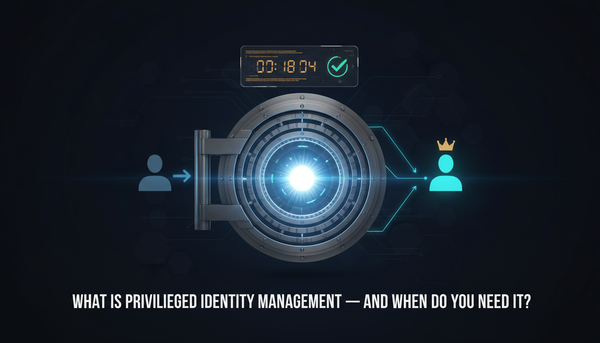
In Microsoft Entra ID, least privilege is enforced through built-in roles (scoped to specific functions), Privileged Identity Management (just-in-time access), and Conditional Access policies that restrict what users can do based on risk and context.
Real-World Example
A healthcare organization conducts an access review and discovers that 40% of their users have access to systems outside their department. A billing clerk has read access to clinical records. A developer has standing admin access to a production database they haven't touched in a year.
None of this was malicious — it accumulated over time through role changes, project assignments, and nobody cleaning up after. The fix: enforce role-based access, remove standing admin rights, and schedule quarterly reviews. The attack surface drops significantly overnight.
Best Practices
- Audit existing access first — you can't enforce least privilege without knowing what access currently exists
- Use role-based access control (RBAC) over direct permission assignments
- Eliminate standing admin access — use just-in-time elevation instead
- Remove access promptly when someone changes roles or leaves the organization
- Apply least privilege to service accounts and APIs — not just human users
- Document your role definitions — auditors will ask for them
Key Takeaway
Least privilege isn't a one-time configuration. It's an ongoing discipline — and the gap between "we have a policy" and "we enforce it" is where most organizations get compromised.
Quimirr Heyward is an IAM specialist with 7+ years in Risk Management and Compliance. He writes about identity security at QuimirrHeyward.com.