Why IAM Is the Foundation of Your Security Program, Not a Feature of It
What Is It?
Identity and Access Management (IAM) is the set of policies, processes, and technologies that control who can access what within an organization — and under what conditions. At its core, IAM is responsible for managing the full lifecycle of digital identities: creation, authentication, authorization, governance, and deprovisioning.
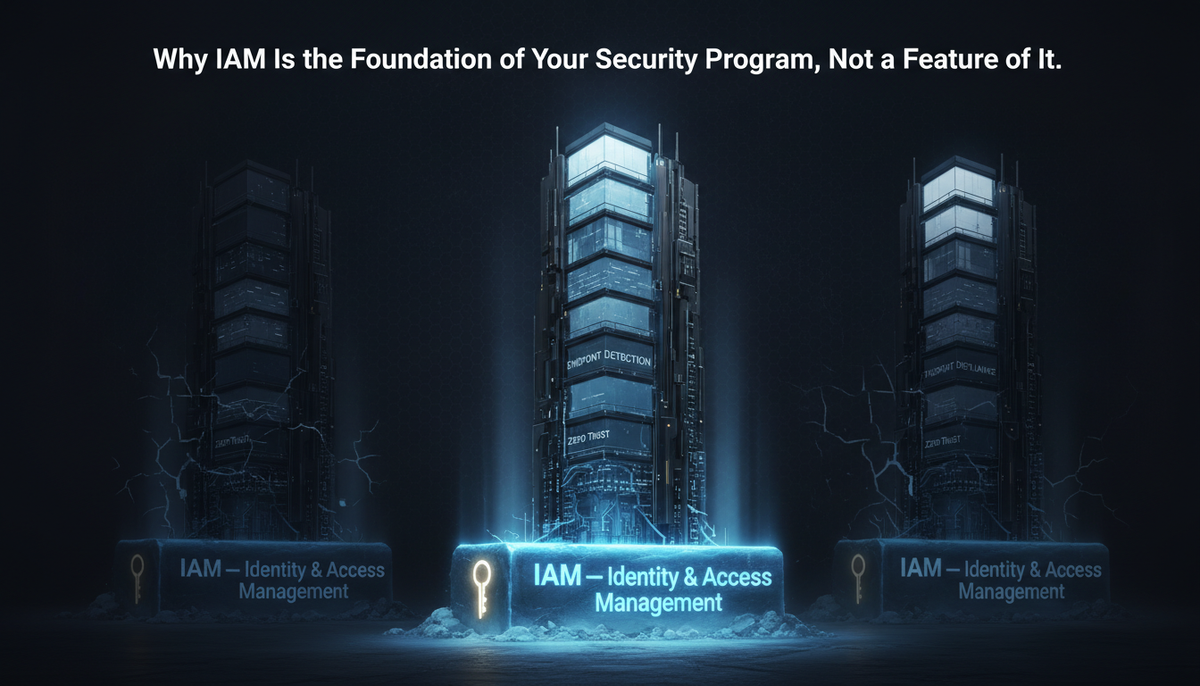
For years, IAM was treated as an IT function — a back-office discipline concerned with provisioning accounts and managing password resets. That framing has become a liability. IAM is not a feature of your security program. It is the foundation.
Why Does It Matter?
Look at the most significant breaches of the past decade. The common thread is not a zero-day exploit or sophisticated malware — it's compromised identity. Stolen credentials. Overprivileged accounts. Unmonitored service accounts. Stale access that should have been removed months prior.
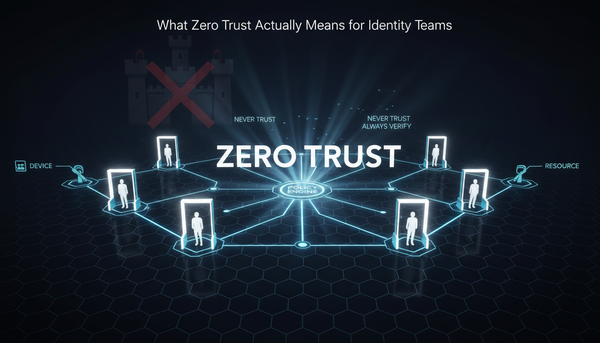
Attackers don't break in anymore — they log in. They acquire legitimate credentials and move through environments using the same access paths as real users. Traditional perimeter defenses — firewalls, antivirus, network segmentation — provide little protection against an attacker who has valid credentials.
The only layer that can address this consistently is identity.
How Does It Work?
A mature IAM program operates across four interconnected domains:
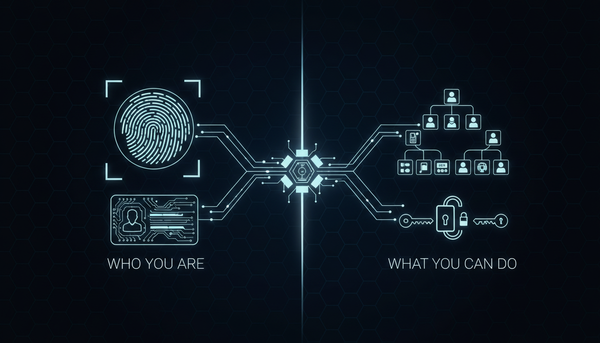
Authentication — Verifying who a user is before granting any access. Strong authentication (MFA, passwordless, risk-based) is the entry gate.
Authorization — Determining what an authenticated user can do. Role-based access, scoped permissions, and least privilege define the boundaries.
Governance — Ensuring that access is appropriate, reviewed, and documented. Access reviews, provisioning workflows, and separation of duties keep the program aligned to business and compliance requirements.
Visibility — Logging, monitoring, and alerting on identity events. Sign-in logs, audit trails, and anomaly detection give security teams the insight to detect and respond to identity threats.
Each domain reinforces the others. Governance without visibility misses active threats. Authentication without authorization leaves the interior exposed. IAM works as a system — not as a collection of independent tools.
Real-World Example
Two organizations experience the same attack: an employee's credentials are phished and used by an attacker to log in remotely.
Organization A has MFA enabled but no Conditional Access, no PIM, no access reviews. The attacker bypasses MFA via an AiTM proxy, logs in from a foreign IP, accesses cloud storage, and exfiltrates data for three days before detection.
Organization B has a mature IAM program. Conditional Access blocks the high-risk sign-in. The attacker's session is terminated. An alert fires to the security team. The compromised account is flagged and suspended within the hour. No data is exfiltrated.
Same attack vector. Completely different outcome. The difference is IAM maturity.
Best Practices
- Treat IAM as a program, not a project — it requires ongoing investment, governance, and review
- Start with an identity inventory — you cannot protect what you cannot see
- Enforce MFA universally as your non-negotiable baseline
- Build toward least privilege — audit current access, define roles, remove what's unnecessary
- Integrate IAM with your security operations — identity logs should feed your SIEM
- Measure your IAM maturity — use a framework like NIST or CISA's Zero Trust model to benchmark and improve
Key Takeaway
Your firewall protects your perimeter. Your IAM program protects your organization. In a world where identity is the attack surface, there is no security program without a strong identity foundation.
Quimirr Heyward is an IAM specialist with 7+ years in Risk Management and Compliance. He writes about identity security at QuimirrHeyward.com